
During the quarantine period, Kitty Duffy, a 67-year-old from Brighton, began reassessing her health and daily fitness routine. What started with simple seaside walks soon turned into something far more transformative. Like many people during lockdown, she tried Joe Wicks home workouts that her grandchildren were doing. The sessions focused mainly on basic strength training, but when Kitty introduced light dumbbells into her routine, something instantly clicked. Before long, those small weights turned into heavier barbells, and her interest in lifting continued to grow. She admits that lockdown included plenty of food and drinks, but regular walking and home workouts made her realize that strength training was something she truly enjoyed.
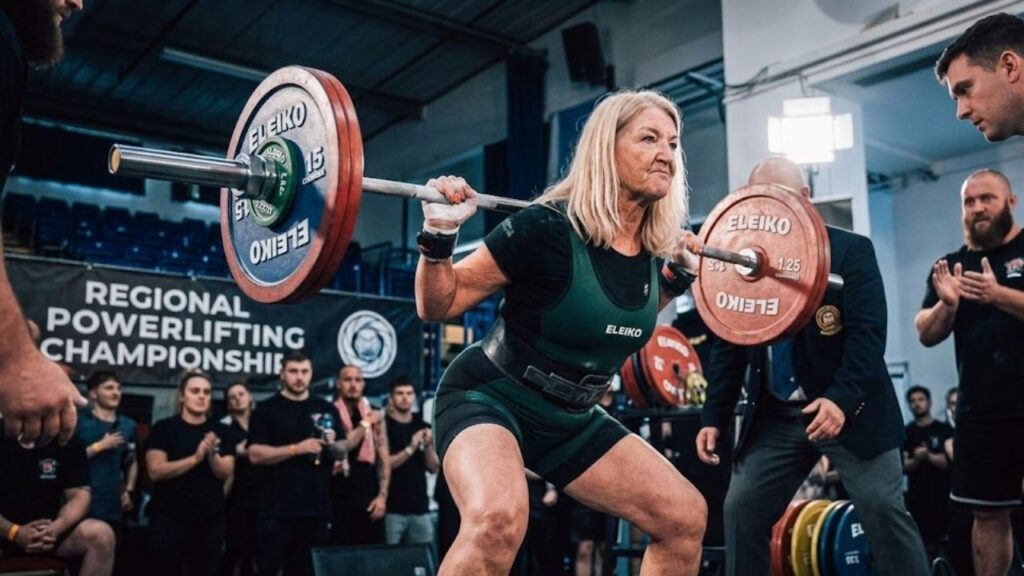
From Living Room Workouts to Powerlifting
Kitty’s interest in lifting gradually led her toward powerlifting, a form of strength sport that focuses on three main lifts: squat, bench press, and deadlift. What attracted her most was the satisfaction of lifting heavy weights. She began working with a personal trainer, and soon realized she had impressive strength. According to Kitty, it wasn’t just being strong for her age — she was genuinely strong. This realization boosted her confidence and motivated her to keep improving. The physical progress and the sense of achievement made strength training not only a workout routine but also a powerful source of personal motivation.
Changing Careers and Starting Powerlifting in Her 60s
Before entering the fitness world, Kitty had spent years working as a Director of Children’s Social Care. In her early sixties, she decided to make a bold career change and retrain as a personal trainer. She completed her training at the age of 62 and was the oldest participant in the course. Around that time, she heard about Betty Gray, an older powerlifter who inspired her curiosity about the sport. Determined to learn more, she found a coach named Delroy McQueen. With his guidance, Kitty officially began her powerlifting journey at 63 years old, proving that it’s never too late to start something new.

Overcoming Confidence Barriers at the Gym
Like many beginners, Kitty initially struggled with self-doubt and the fear of being judged in the gym. She recalls feeling intimidated and worried about making mistakes during workouts. However, with time and experience, she learned that most gym environments are actually very supportive and welcoming. Kitty now trains and coaches at Kings Gym Brighton, where she says the community is friendly and encouraging. Her experience shows that once people step into the gym and begin training consistently, they often stay because of the positive atmosphere and shared motivation.
Helping Clients of All Ages Build Strength
Today, Kitty trains people of many different ages and backgrounds. One of her clients is 70 years old, while others range from teenagers to adults in their sixties. Her coaching focuses on individual progress rather than comparison. She even works with a client who struggled with lifelong obesity, and through gradual strength training, the client has significantly reduced her insulin dependence. Kitty believes that strength training should be adaptable to each person’s abilities, proving that anyone can benefit from building muscle and improving fitness regardless of their starting point.
The Role of Diet and Supplements in Strength Training
For Kitty, nutrition plays a major role in maintaining performance and preventing injuries. She emphasizes the importance of including a protein source in every meal because protein helps maintain muscle mass and bone density. To increase her daily intake, she adds protein powder to her morning porridge, providing around 22 grams of protein at the start of the day. She also uses supplements like creatine, which research suggests can support strength training performance and may also have benefits for brain health.

Why Strength Training Supports Healthy Ageing
There has been a growing number of women taking up powerlifting and resistance training, especially later in life. Studies consistently show that strength training supports healthy ageing, improves bone strength, and helps maintain muscle function. These benefits are particularly important for menopausal women, who often experience muscle loss and reduced bone density. Kitty believes that the key to long-term fitness is building a routine that becomes a natural habit and contributes to a stronger, more independent future.
Building Discipline and Long-Term Fitness Habits
According to Kitty, long-term fitness success requires discipline and consistency. She trains about four days per week and believes regular exercise prepares the body for the later stages of life. Her motivation is simple — she wants to stay active enough to climb stairs easily, lift objects safely, and play with her grandchildren. Finding an activity you genuinely enjoy is crucial because enjoyment helps maintain consistent training habits. For Kitty, strength training has been truly life-changing, and she plans to continue lifting for as long as her body allows.
How Beginners Can Start Powerlifting Safely
| Step | Explanation |
|---|---|
| Practice Compound Lifts | Focus on the three main movements: squat, bench press, and deadlift. |
| Start With Light Resistance | Beginners can begin with body weight exercises or resistance bands. |
| Work With a Coach | A trainer helps correct form and provides structured progression. |
| Use a Training Program | A planned routine gradually increases intensity and strength. |
| Train at Home or Gym | Both options work as long as progress and consistency are maintained. |
Key Tips for Getting Into Powerlifting
To begin powerlifting, start by learning the three compound lifts that define the sport: squat, bench press, and deadlift. Beginners should focus on proper form and gradually increase resistance over time. Using resistance bands or bodyweight exercises can help build initial strength before moving to heavier weights. If possible, training with a qualified coach can improve technique and reduce injury risk. Even if a coach isn’t available, many gyms provide introductory sessions to guide new members. The key is consistent progression, patience, and enjoying the process of getting stronger.
 5 Beginner Exercises That Build Core Strength Faster Than Planks and Improve Stability After 55