
Her cheeks have dropped a little. The rounded parts that used to rise when she smiled now blend softly into her jawline. She picks up her favourite blush brush and does what she always does: smiles and puts colour on the apples of her cheeks. Then she stops. The colour makes her face look like it’s drooping instead of lifting. The dark circles under her eyes look darker, and the middle of her face looks a little puffy. She takes off the blush and tries again, this time putting it a little higher. Her cheekbones suddenly look sharper. Her face looks like it’s been lifted, and her eyes look more awake. She put on the same blush. She is still the same person. But her face looks very different. The product stayed the same. What changed was where she put it.

How to Put on Blush
Your makeup routine stops working as well at a certain age. There isn’t a clear time when it happens. When you use the same methods that worked for years, you start to wonder why things don’t look right anymore. The first problem is usually blush. When you put it on low and round, it can make a 32-year-old look tired by the end of the day. The colour that used to look fresh on your cheeks now looks more like soft lines around your mouth and nose. It doesn’t add shape; it just settles into those places. At that point, it matters more where you put blush than which one you use. A makeup artist in London told me she can tell how old someone is just by watching them put on blush. Younger people put it right in the middle of their cheeks, like a simple drawing. People over 30 often keep doing this even though their faces have changed a little bit over time. She talked about two sisters, one 28 and one 38, who came to see her together. They had the same skin tone and used the same products. The colour on the apples of her cheeks made her whole face look better on the younger sister. That same spot suddenly made the small dips under the older sister’s eyes stand out more. When the artist moved the blush up to the 38-year-old’s temples, it made her look like she had gotten a good night’s sleep. The colour acted like a soft filter that made her eyes and cheekbones stand out more than the middle of her face. Even though people don’t talk about it much, the reason for this is clear. Your bones don’t change after you turn 30, but the fat under your skin does. The round part of your cheek goes down. Your muscle memory still makes you smile and follow where that round part used to be. So you end up putting colour in the part that is starting to fall. Putting blush there makes your face look like it’s drooping. It makes your face look lifted if you move it up and out a little bit. You’re not really changing how you look. You’re just changing where people look first when they see you. That’s why a little bit of pink blush works so well.
The Modern Blush Placement Map That Gives You a Natural Lift
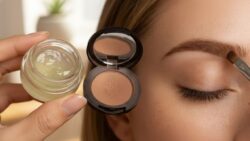
The Easy Blush Trick That Works After 30 The makeup trick that keeps popping up all over the place is actually very simple. You shouldn’t smile and put blush on your cheeks. Instead, you should keep your face relaxed and look straight ahead. Imagine a line going from the top of your ear to the side of your nostril in a diagonal direction. Put your blush on the top half of that imaginary line, closer to your ear than your nose. The shape should be a soft, slanted C that curves toward the outer corner of your eye. Instead of blending the colour down toward the middle of your cheek, blend it up into your temples. Let the colour fade slowly as it moves toward your hairline, like watercolour on paper. For most people over 30, this placement will quickly make your cheekbones stand out again. There is one more small change that makes a big difference. Leave a clean space between your blush and the area under your eyes. A finger’s width of bare skin keeps colour from settling into fine lines or making dark circles stand out. You can put a little blush on the bridge of your nose to get that fresh, flushed look, but keep the main colour high and toward the outer face. A lot of people over 30 feel the same way. They want to look healthy, but they don’t want to look too done up. The worry makes sense because putting too much on too low on the cheek can make you look flushed in a bad way. This is why where you put the blush is more important than how much you use. Start with less than you think you need. Instead of sweeping it across your skin, tap it on. Instead of putting on one thick stripe, build up the colour slowly in thin layers. Cream blushes are often better for older skin because they blend in with the skin instead of sitting on top of it. Let’s be honest about life. No one really does this every day with professional brushes and twenty minutes to spare. You could be putting on makeup with one hand and looking at your phone with the other. Just remember one simple rule, like “higher and further back,” and forget about the rest. It really does have an emotional effect. If you’re tired, that slightly higher placement can make your whole face look more awake. You look like the person you still feel like inside all of a sudden.
Important Things to Keep in Mind
- When you put blush on in an upward diagonal line, think of it as an angled line instead of a circle.
- Stay away from the strongest colour around your nose and mouth.
- Mix up into your temples to make the outer part of your face look like it’s lifting.
- Pick cream or liquid formulas if powder makes skin feel rough.
- Check your blush placement every few years because your face changes and so should your routine.
How Blush Changes Over Time to Boost Confidence in a Subtle Way
Changing how you use a product you’ve used for 15 years is a small but radical thing. It’s like saying that your face has changed and then choosing to work with it instead of against it. One thin diagonal stripe turns into a small deal with time. People talk in bathrooms about how they look tired or not quite like themselves. A lot of the time, it’s not their face that has changed so much, but the way light and shadow move across it. If you change the colour, the light will look like it’s coming from a different place. It’s almost philosophical because the map you draw on your skin changes the story your face tells before you even say anything. We’ve all had that moment when we see our reflection in a store window and wonder who we are. Remapping blush doesn’t get rid of the shock, but it can make it less strong. The right placement lets you know you’re still there. It doesn’t make you look 22, but it does show off the structure and expression you’ve worked hard to get without bringing everything down. This small change is also strangely easy to share. It’s hard not to show a friend or your mum once you’ve tried the higher lifted placement and seen the difference. In the end, you do the half-and-half trick, with one cheek the old way and the other the new way. The contrast usually says more than any lesson. Blush is less about following trends and more about knowing your own style. Where do you want colour on your face, and where does it look more awake right away? There isn’t a single diagram that works for everyone, but a general idea is that colour moving up tends to look youthful and energetic. Colour that collects in the middle usually means tiredness. Maybe that’s why this method keeps coming up on social media, even though contouring and highlighting come and go. It’s easy and doesn’t need any new products. You’re only moving what you already own a few millimetres to the north.

| Astuce principale | Méthode recommandée | Bénéfice esthétique |
|---|---|---|
| Remonter la zone d’application | Déposer le blush au-dessus de l’axe oreille-nez, en direction des tempes | Donne un effet lift naturel au visage, sans chirurgie ni retouche |
| Préserver l’espace sous l’œil | Laisser environ un doigt de peau libre entre le correcteur et le blush | Atténue visuellement les cernes et limite l’accentuation des ridules |
| Favoriser les lignes obliques | Estomper le blush en diagonale plutôt qu’en cercle sur la joue | Affi |