
The first signs of cracked heels often show up without making a sound. Fine white lines appear on the heel, making it look like a dry riverbed. At first, they don’t seem like a big deal and are easy to ignore. You might want to blame walking around the house barefoot or wearing those sandals every day. But one morning, when you get out of bed, the floor feels rough under your feet. It hurts and pulls sharply. The cracks have gotten worse and hurt, and sometimes they even get stuck in your socks.
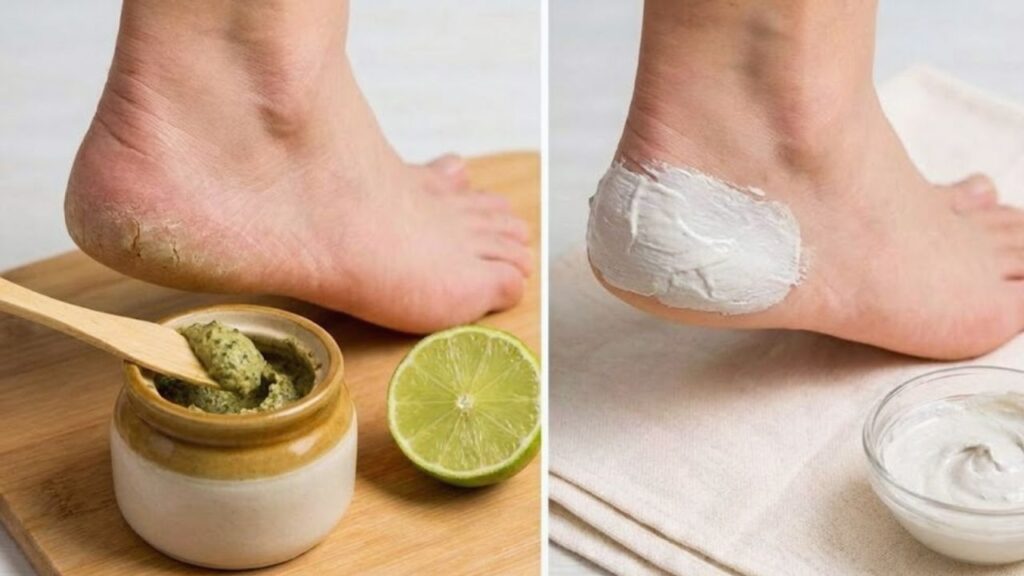
A Quick and Easy Way to Fix Dry Heels
At some point, you quietly realise that it’s time to do something. Dry, cracked heels can sneak up on you without you even realising it until they hurt. Every step reminds you that your feet need some care. They help you get through long days and nights. The good news is that getting better doesn’t have to cost a lot of money or be hard to do. You already have a lot of useful things in your kitchen that you use every day, like jars and bottles.
The Quiet Message Your Heels Send
You might not know it, but your heels work hard. They take the first hit with every step and feel constant pressure when you stand or walk for a long time. It’s easy to forget about them because they’re usually covered and out of sight. You might notice roughness in the shower and tell yourself you’ll deal with it later, but you forget again.

Your skin shows what it goes through over time. If your heels are dry and cracked, it could mean that you’ve been putting too much pressure on them for too long, rubbing them against something, or not getting enough moisture. Walking on hard floors without shoes, wearing open-backed shoes, or shoes with thin soles can all make things worse. Taking long, hot showers, being outside in the cold, and heating your home all make your skin even drier.
The skin on your heels is naturally thick to protect you, but when it loses its flexibility, it can’t bend as you walk. Instead, it breaks apart and makes painful cracks. The good news is that your skin is always healing itself. Healing can happen faster than you think when you give it moisture, gentle care, and protection.
Your Kitchen as a Place to Heal Gently
Your kitchen has more than just food; it also has simple, effective ways to care for your skin. Olive oil or coconut oil deeply moisturises heels that are rough and dry. Honey helps the skin absorb moisture and calms down areas that are irritated. Milk and yoghurt are good for flaky skin because they make it softer. Mixing sugar or salt with oil makes a gentle scrub that gets rid of dead skin cells.
Using common ingredients is comforting because you know them and can trust them. You don’t need special products or complicated labels. These are simple things with smells and textures that you already know. Knowing how each ingredient works makes your care routine even better.
Olive oil and coconut oil deeply moisturise cracked heels and soften rough skin. They are great for night massages and homemade scrubs.
Honey: Keeps moisture in, soothes irritation, and helps the skin heal. It makes a great healing mask.
Milk and yoghurt: Natural lactic acid gently loosens dead skin. They can be used in foot soaks or softening packs.
Sugar and salt: They remove rough layers and smooth out uneven skin. They work best after soaking your feet.

Banana/Avocado: Contains vitamins and healthy fats that are good for your skin and can help with very cracked heels.
A Quiet Evening Routine for Cracked Heels
This routine is like a calm break at the end of the day. The house gets quieter, and you take a break for just fifteen minutes to take care of your feet.
Step 1: Soak your feet in warm milk and salt. Put warm water in a basin that feels good on your skin. Put in half a cup of milk, one or two spoons of salt, and a little bit of olive oil. Soak your feet for 10 to 15 minutes. The warmth relaxes the skin, the milk makes dry spots softer, and the oil starts to add moisture back in.
Step 2: Lightly scrub to make it smooth. Mix sugar or fine salt with olive oil or coconut oil to make a thick paste. Using slow, circular motions, gently rub it into your heels, paying special attention to rough spots. Don’t scrub too hard; gentle care works better than rough rubbing. When you’re done, rinse with warm water.
Step 3: Mask for Repair with Honey and Yoghurt. Add a few drops of oil to a tablespoon of honey and a tablespoon of thick yoghurt. Put a lot of the mixture on the cracks and let it sit for ten to fifteen minutes. This mask deeply hydrates and calms the skin. Gently rinse and pat your feet dry.
Overnight Oil Therapy for Softness That Lasts
Warm up a small amount of olive oil or coconut oil before bed and rub it into your heels for a few minutes. Put on clean cotton socks before bed to keep moisture in. In the morning, your heels often feel much softer, smoother, and less sore.
Things You Can Do Every Day to Keep Your Heels Healthy
Once your heels are better, it’s easy to keep them from cracking again. After you shower, put on moisturiser, stay hydrated all day, and don’t use water that is too hot. Do something as soon as you notice dryness. These small things can help you avoid more serious pain in the future.
When Home Care Isn’t Enough
You may need to see a doctor if your heel cracks get very deep, start to bleed, or don’t get better with regular care. Some health problems can make healing take longer. A doctor or podiatrist can recommend the best treatment. Home remedies can help you feel better and give you support, but medical advice is what makes sure you get better.

Most of the time, cracked heels just mean that your skin is dry and needs some care. Your feet can feel better again with warmth, oils, patience, and everyday household items. They will be ready to support you through daily life.
 7 Minute Hip Mobility Routine Helps Reduce Tightness and Makes Everyday Movement Feel Much Easier