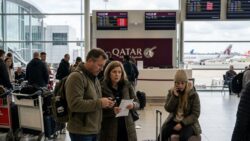
A widening aviation crisis across the Middle East is creating serious disruptions for international travel. Thousands of passengers are being affected as airlines cancel flights, reroute aircraft, and adjust schedules across several major global corridors. Countries such as Saudi Arabia, Turkey, the United Arab Emirates, Iran, Bahrain, Kuwait, and Qatar are currently dealing with airspace restrictions and operational challenges as regional tensions intensify.
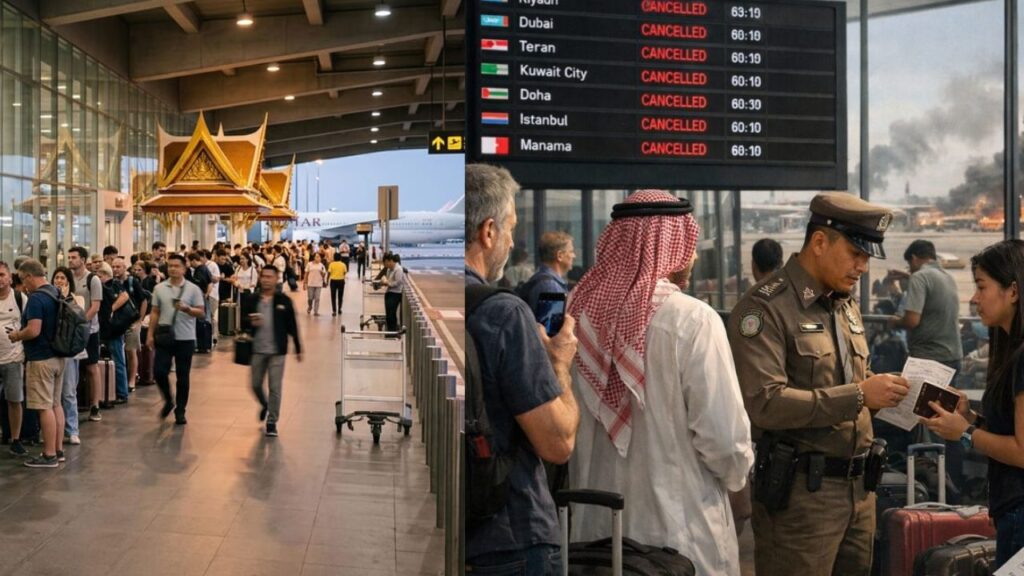
The consequences of these disruptions are extending far beyond the Middle East. International routes connecting Europe, Asia, and Africa have been heavily impacted, leaving many travelers stranded in different countries. In response to the growing situation, Thailand has introduced temporary immigration policies and financial assistance options to support tourists who are unable to return home because of the crisis.
Airspace Restrictions Impact International Aviation Routes
Airspace across several areas of the Middle East has become increasingly restricted due to security concerns connected to escalating tensions in the region. Countries including Iran and Iraq have implemented strict airspace closures, while others have introduced partial limitations or operational flight restrictions.

These restrictions are affecting some of the busiest aviation corridors in the world. Many airlines operating between Europe and Asia normally rely on Middle Eastern airspace as a central transit route for long-haul flights.
As more restrictions are introduced, airlines are being forced to take longer alternative routes. These diversions are increasing travel times and triggering delays and cancellations across several continents. Major international carriers, including airlines based in the Gulf region, have temporarily suspended some services or modified schedules to avoid restricted areas.
Saudi Arabia Experiences Flight Delays and Operational Adjustments
Saudi Arabia has become one of the key locations experiencing the effects of the aviation disruptions. While the country has not fully closed its airspace, airports throughout the kingdom are facing operational pressures.
Major aviation hubs such as King Khalid International Airport in Riyadh and King Abdulaziz International Airport in Jeddah have experienced flight delays and cancellations. Airlines are modifying flight paths to avoid sensitive areas, which has extended travel times and created scheduling complications.
Saudi Arabia’s national carrier along with several international airlines have also suspended certain routes connecting the region with Europe and Asia. These changes have contributed to a broader chain reaction of travel disruptions affecting passengers across multiple regions.
Gulf Countries Face Widespread Travel Disruptions
The travel impact is not limited to Saudi Arabia. Several other Gulf Cooperation Council countries including Bahrain, Kuwait, Qatar, and the United Arab Emirates are also experiencing aviation challenges as flights are rerouted or canceled.
Airlines that normally operate through major transit hubs such as Dubai, Doha, and Abu Dhabi have been forced to adjust schedules and modify routes. As a result, passengers traveling between continents are experiencing longer journey times and fewer available flight options.
In many cases, travelers have become stranded during connecting flights or unexpected layovers, particularly in destinations that depend heavily on international tourism.
Thailand Introduces Emergency Support for Stranded Travelers
Thailand has emerged as one of the first countries to implement immediate support measures for travelers affected by the aviation crisis. As one of the world’s most popular tourism destinations, Thailand has seen a significant number of international visitors unable to depart because of flight cancellations.
Thai immigration authorities announced temporary policy adjustments to assist tourists whose visas or permitted stay periods have expired due to the ongoing travel disruptions.
Foreign travelers who were unable to leave Thailand because of the aviation crisis will not face the usual overstay penalties when they eventually depart the country. Normally, visitors who remain beyond their permitted stay must pay a daily fine of 500 Baht.
Under the temporary measures, those impacted by the flight disruptions will be allowed to exit the country without paying these overstay fines.
Temporary Visa Extension Options for Tourists
Tourists who cannot arrange immediate flights home may apply for a temporary stay extension in Thailand. Immigration officials are offering extensions of up to 30 days for affected travelers.
To apply for the extension, visitors must submit a standard immigration application form along with a copy of their passport and other supporting documents. In some cases, travelers may also need to provide a letter from their embassy or consulate confirming the circumstances of their extended stay.

Once the application is approved, tourists will be legally permitted to remain in Thailand until they are able to secure a return flight.
Financial Assistance Program Being Considered
Thailand’s Ministry of Tourism and Sports is also exploring financial assistance programs to support tourists stranded because of the aviation crisis. Officials are currently discussing the creation of a temporary relief fund that could help cover accommodation and daily living costs.
The proposed support program may provide financial assistance of up to 2,000 Baht per day for accommodation and basic expenses. However, the total support available to each traveler could be capped at 20,000 Baht.
Instead of providing funds directly to visitors, the assistance would likely be distributed through hotels and tourism businesses that are hosting stranded travelers. This method would help both tourists and local hospitality providers during the disruption.
Local Tourism Businesses Offer Additional Support
Thailand’s tourism industry has also taken steps to assist affected travelers. Hotels and travel operators in major destinations such as Bangkok, Phuket, Chiang Mai, and Krabi are introducing flexible policies to help visitors manage the unexpected situation.
Many hotels are waiving change fees for reservations or offering discounted rates for extended stays. Some travel agencies are also helping tourists identify alternative flight routes through other countries.
These efforts highlight cooperation between government authorities and private tourism businesses to support travelers during the crisis.
International Governments Respond to Travel Disruptions
Thailand is not the only country introducing temporary measures for stranded visitors. Several other destinations across Asia and the Indian Ocean region including Sri Lanka, India, Indonesia, and the Maldives have also implemented immigration relief policies.
These policies include temporary visa extensions, relaxed departure rules, and assistance programs aimed at helping foreign tourists who are unable to travel because of airline disruptions.
Governments and aviation authorities around the world continue to monitor the situation in the Middle East while adjusting travel policies as conditions evolve.
Travelers Urged to Monitor Airline Updates
With ongoing airspace restrictions and frequent flight schedule changes, travelers are being advised to regularly check updates from airlines and official government travel advisories.
Airlines continue to modify routes and flight schedules as the situation develops across the region.
Passengers planning international travel should be prepared for possible delays, rerouted flights, or schedule adjustments while the global aviation network adapts to the disruptions.

While the situation remains fluid, support measures introduced by countries such as Thailand are helping ensure that travelers affected by the aviation crisis receive assistance until normal flight operations resume.

Key Support Measures for Stranded Travelers
| Support Measure | Details |
|---|---|
| Overstay Penalty Waiver | Tourists affected by canceled flights will not be required to pay the normal 500 Baht daily overstay fine. |
| Temporary Visa Extension | Travelers can apply for an additional stay of up to 30 days through Thai immigration. |
| Financial Assistance Proposal | Potential support of up to 2,000 Baht per day for accommodation and living expenses. |
| Maximum Assistance Limit | Total financial aid may be capped at 20,000 Baht per traveler. |
| Industry Support | Hotels and travel agencies offering flexible booking changes and discounted extended stays. |