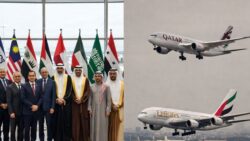
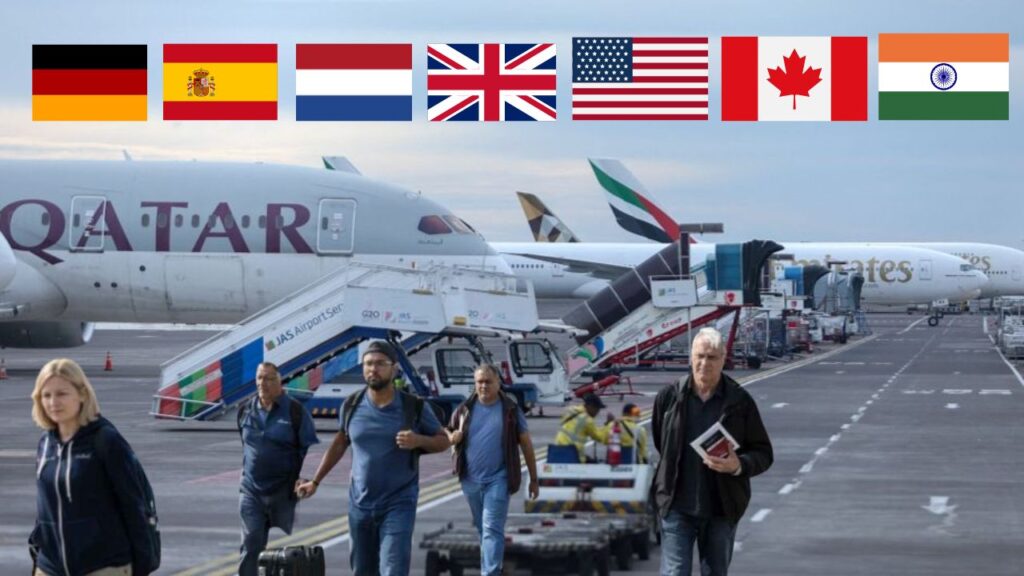
The recent travel disruptions triggered by rising geopolitical tensions in the Middle East have left thousands of international passengers stranded across major transit hubs in the region. With sudden airspace closures and unexpected flight suspensions, travelers were left waiting in uncertainty, unable to continue their journeys. In response to the crisis, several nations and airlines stepped forward to support affected passengers through emergency accommodation, visa extensions, and special repatriation flights. Major carriers including Qatar Airways, Emirates, Etihad Airways, and IndiGo coordinated operations to launch nearly sixty repatriation flights designed to bring stranded travelers back to their home countries. The joint efforts of governments from the UK, the United States, Canada, Spain, Germany, and several other nations highlight how international cooperation can play a crucial role during global travel disruptions.
A Coordinated Global Response
The widespread travel disruption began when escalating geopolitical tensions in parts of the Middle East led to security concerns and the restriction of key airspace routes. As a result, airports across the Gulf region, including major transit hubs in the United Arab Emirates, Oman, and Saudi Arabia, quickly filled with travelers who could no longer continue their flights.
For many passengers, these airports suddenly became temporary waiting points where uncertainty and long delays became unavoidable while authorities assessed the evolving situation. Governments and aviation authorities responded rapidly, introducing emergency measures designed to assist the growing number of stranded travelers.

The United Arab Emirates implemented emergency hospitality programs, offering free hotel accommodations and meals to passengers who were unable to depart immediately. Meanwhile, countries such as Sri Lanka and Oman extended visa validity periods so that travelers would not face legal complications during the disruption.
Other nations in the region, including Turkey, Qatar, and Bahrain, also introduced transit assistance programs. These measures allowed travelers to move between airports and continue their journeys once flight operations resumed, reducing the overall impact of the travel crisis.
Airlines Lead Repatriation Operations
Major airlines operating across the Gulf region played a vital role in restoring international connectivity during the disruption. Qatar Airways, one of the region’s largest international carriers, continued operating flights through Hamad International Airport in Doha despite the challenging conditions.
On March 8, 2026, multiple long-haul flights from cities such as London, Paris, Madrid, Frankfurt, and Bangkok safely arrived in Doha between 7:00 AM and 9:00 AM local time. These arrivals reassured travelers that important global aviation hubs were still functioning even during the tense geopolitical situation.
Emirates Airlines, headquartered in Dubai, also maintained its international flight operations while closely monitoring airspace safety. The airline adjusted flight paths when necessary to avoid restricted areas while continuing departures to destinations across Europe, North America, and Asia.
Flights from Dubai departed for major cities including New York, London, Paris, Frankfurt, and Manchester. These continued operations helped maintain Dubai’s role as a critical international aviation hub during the crisis.
Etihad Airways, operating from Abu Dhabi, also sustained its network linking the Gulf region with South Asia. Key routes connecting Indian cities such as Mumbai and Hyderabad with Abu Dhabi remained operational, along with regional connections to Muscat.
These continued operations ensured that business travelers, tourists, and expatriate communities could maintain essential travel links despite the disruption.
IndiGo Expands Operations During the Crisis
India’s largest airline, IndiGo, also played a significant role in assisting travelers affected by the Middle East travel disruptions. The airline scheduled multiple international flights from major Indian cities including Mumbai, Delhi, Hyderabad, Bengaluru, and Kozhikode.
These flights connected passengers to destinations across Europe and the Middle East, including London, Amsterdam, Abu Dhabi, Dubai, and Jeddah. IndiGo’s rapidly expanding international network proved particularly important during the crisis.
The airline’s services between India and Gulf destinations remain essential due to the large Indian expatriate population living and working in the region. In addition, flights to cities such as Jeddah and Medina are vital for religious pilgrims traveling to Saudi Arabia.
By maintaining these routes and increasing flight availability, IndiGo helped support global travel connectivity during a period of significant disruption.
Humanitarian Assistance for Stranded Travelers
Beyond aviation operations, the crisis also prompted a wave of humanitarian support from multiple countries. Governments and local authorities took quick action to ensure stranded passengers received shelter, food, and legal protection during the disruption.

Sri Lanka introduced visa extensions for travelers unable to depart immediately, ensuring they could remain legally in the country until their flights resumed. The government also partnered with hotels and local businesses to provide complimentary accommodation and meals.
Similarly, Bahrain and Qatar introduced emergency transit arrangements designed to help travelers move between regional airports and secure alternative flights. These measures included facilitating transit permits and providing transportation assistance.
Turkish authorities also collaborated with airlines to establish alternative routes for passengers stranded at airports across the region. These coordinated efforts helped ensure that foreign nationals could continue their journeys safely and efficiently.
Impact on Global Aviation Networks
Although emergency repatriation flights and government assistance have helped manage the immediate crisis, the disruptions continue to affect global aviation networks. Airlines remain cautious as they monitor airspace conditions and adjust flight routes when necessary.
The situation has highlighted how sensitive global travel networks can be to geopolitical developments. Major aviation corridors linking Europe, Asia, and Africa frequently pass through Middle Eastern airspace, making the region critically important for international travel.
Airlines are now implementing contingency plans that allow flights to be rerouted quickly if airspace restrictions expand further. While these adjustments help maintain safety, they can also lead to longer flight times, delays, and schedule changes.
Industry experts expect that although the situation may stabilize in the coming weeks, the effects of the disruption could continue to influence airline operations for some time.
International Cooperation During Crisis
The travel crisis has clearly demonstrated the importance of cooperation between governments, airlines, and aviation authorities during global emergencies. The coordinated repatriation flights organized by Qatar Airways, Emirates, Etihad Airways, and IndiGo illustrate how airlines can respond quickly to assist passengers during unexpected disruptions.
At the same time, the willingness of governments to provide emergency visas, accommodation, and transit support reflects the importance of humanitarian cooperation during international crises.
When multiple countries and organizations work together, the global travel system becomes far more resilient, allowing stranded passengers to receive the support they need while normal operations gradually resume.
Key Airlines Supporting Repatriation Efforts
| Airline | Main Hub | Key Contribution |
|---|---|---|
| Qatar Airways | Doha | Operated long-haul repatriation and transit flights |
| Emirates | Dubai | Maintained global routes while adjusting airspace paths |
| Etihad Airways | Abu Dhabi | Connected Gulf region with Indian cities and regional hubs |
| IndiGo | India | Expanded international flights linking India with Gulf and Europe |
Conclusion
As tensions in the Middle East continue to affect international aviation, the global response to assist stranded travelers has demonstrated the strength of international collaboration. Airlines such as Qatar Airways, Emirates, Etihad Airways, and IndiGo have played an important role by launching repatriation flights and maintaining key travel routes.
At the same time, governments across several regions have provided humanitarian support through visa extensions, accommodation assistance, and transit arrangements. These combined efforts ensure that travelers receive essential support during difficult circumstances.

While the disruption has challenged global aviation networks, the coordinated response shows that when countries and airlines work together, international travel systems can adapt and recover even during complex geopolitical crises.