
Air travel across the Gulf region is experiencing one of the most significant disruptions in recent years as rising regional tensions force governments to close airspace and activate emergency travel measures. Several countries within the Gulf Cooperation Council have imposed strict aviation restrictions, leaving thousands of passengers stranded and compelling airlines to cancel or reroute flights.
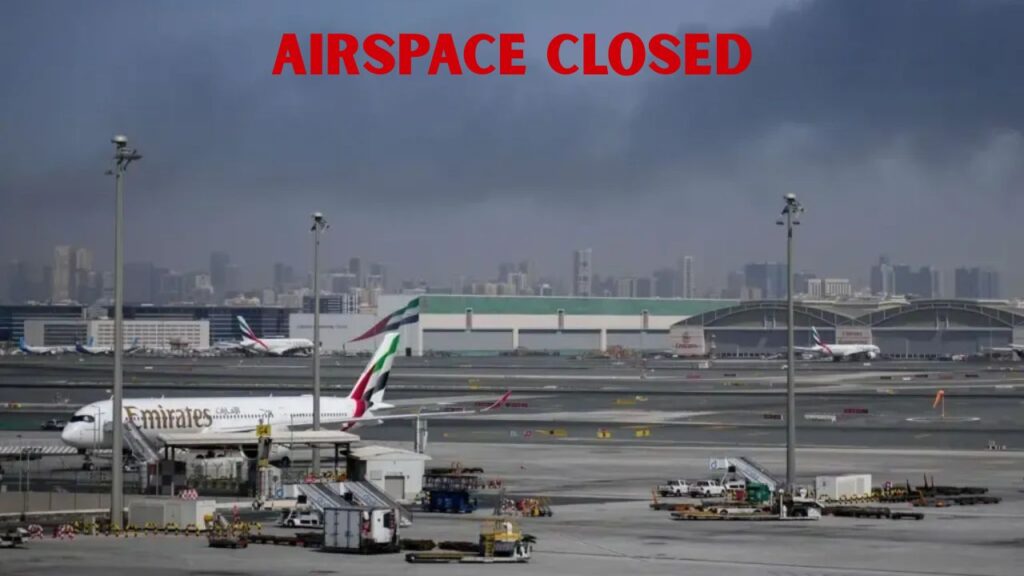
As the crisis enters its fifth day, airspace over Qatar, Bahrain, and Kuwait remains closed. Neighboring nations such as the United Arab Emirates and Saudi Arabia continue operating airports but with limited flight capacity. Major aviation hubs including Dubai International Airport and Riyadh’s King Khalid International Airport are currently functioning under emergency protocols as authorities attempt to maintain essential air connections.
Travel analysts note that the situation is developing quickly, with airlines, governments, and diplomatic missions coordinating efforts to help stranded passengers secure alternative routes out of the region.

Major Airspace Closures Disrupt Regional Flights
The largest impact on global travel has come from the closure of airspace over several Gulf states. Aviation authorities in Qatar, Bahrain, and Kuwait have suspended standard flight operations indefinitely due to security concerns tied to the regional crisis.
These restrictions have severely affected international flight networks that typically rely on Gulf air corridors connecting Europe, Asia, Africa, and Australia.
As a consequence, airlines have canceled numerous services or diverted aircraft along longer alternative paths, creating delays across multiple continents.
Dubai International Airport, one of the busiest aviation hubs in the world, has significantly reduced operations. Hamad International Airport in Doha is also functioning under strict limits on the number of aircraft allowed to depart or arrive each hour.
UAE Activates Emergency Aviation Strategy
To manage the ongoing disruption, the United Arab Emirates introduced an emergency aviation strategy aimed at maintaining a limited flow of flights through the region.
The UAE’s General Civil Aviation Authority confirmed that up to 48 aircraft movements per hour are permitted through specially designated emergency air corridors. These routes are tightly monitored and controlled to maintain safety while preserving minimal international connectivity.
Despite these measures, airlines continue to struggle with scheduling because of restricted airspace across nearby countries.
Airports in Abu Dhabi and Dubai are currently prioritizing essential aviation services including repatriation flights, cargo transport, and a limited number of commercial passenger operations.
Saudi Arabia and Oman Emerge as Transit Gateways
While several Gulf nations have shut their airspace, Saudi Arabia and Oman have kept their airports operational. As a result, cities such as Riyadh, Jeddah, and Muscat have become critical transit hubs for travelers attempting to exit the region.
Saudi authorities have established support services for stranded passengers at major airports, including help desks and dedicated travel hotlines.
Many airlines are now redirecting flights through Saudi and Omani airspace to bypass restricted zones.
Travel experts say these alternate routes are helping maintain a limited level of international connectivity even as broader disruptions continue.
Gulf Cruise Season Ends Early
The crisis has also affected maritime tourism across the Gulf region. Several international cruise operators have canceled upcoming sailings due to safety concerns and restricted access to ports.
Celestyal Cruises and MSC Cruises both announced that their remaining Gulf itineraries scheduled for March have been canceled. These decisions effectively bring the current Gulf cruise season to an early close.
Passengers who had reservations are being offered refunds or the option to transfer their bookings to future voyages.
Cruise companies stated that the decision followed a comprehensive review of regional security conditions and port accessibility challenges.
Countries Launch Evacuation and Repatriation Efforts
With thousands of travelers stranded across the Gulf, governments have begun organizing evacuation and repatriation plans to assist their citizens.
The United States issued a travel advisory encouraging American citizens located in several Middle Eastern countries to leave the region using available commercial flights. The advisory covered 14 countries including Qatar, Bahrain, Kuwait, and Saudi Arabia.
Diplomatic services have also been affected. The U.S. Embassy in Abu Dhabi and the U.S. Consulate in Dubai temporarily suspended services following a security incident involving drones.
The United Kingdom has implemented emergency assistance for British nationals. The UK government arranged a charter evacuation flight departing from Oman to help citizens who were unable to secure commercial flights.

British travelers in the region have also been advised to register with the Foreign Office and avoid areas close to military installations or government buildings.
Singapore Organizes Land Evacuation Plan
Singapore has adopted a different strategy by coordinating land evacuation routes for its citizens stranded in Qatar.
Under this arrangement, Singaporean nationals will be transported by road to Saudi Arabia where they can continue their travel through airports in Riyadh or Jeddah.
Citizens wishing to join the evacuation program have been instructed to register through Singapore’s official government portal so travel logistics can be arranged efficiently.
Officials say land evacuation routes could become increasingly important if airspace closures continue.
Land Transport Becomes Key Travel Alternative
With flights heavily restricted, many travelers are turning to road transport to reach airports that remain operational.
Border crossings between Saudi Arabia and Qatar, as well as Saudi Arabia and Kuwait, remain open for passenger traffic.
However, the King Fahd Causeway connecting Saudi Arabia and Bahrain has been temporarily closed due to security concerns.
Transport operators have introduced new services to assist stranded travelers. A Dubai-based company has launched daily bus routes helping Saudi nationals return to major cities within the kingdom.
Additionally, airlines operating in Oman are coordinating shuttle bus services from the UAE to Muscat International Airport so passengers can access flights from Omani airspace.
Rail Transport Tested During the Crisis
In a notable development, Etihad Rail conducted its first passenger trial operation during the crisis.
More than 350 residents and citizens in the United Arab Emirates were transported between the Saudi border and Abu Dhabi during three trial journeys.
The trial demonstrated how rail infrastructure could serve as an important transportation alternative during emergencies when air travel is disrupted.
Authorities are now evaluating whether passenger rail services could be expanded if the crisis continues.
Limited Airline Services Slowly Resume
Despite ongoing disruptions, a small number of airlines have cautiously restarted limited flight services.
Virgin Atlantic recently resumed selected operations between London Heathrow and destinations such as Dubai and Riyadh. These flights are operating under revised flight paths and strict regulatory approvals.
However, airline schedules remain unpredictable and further adjustments are expected depending on developments in the region.
Travelers Advised to Follow Official Updates
Authorities throughout the Gulf continue advising travelers to rely on official announcements from governments and airlines for the latest updates.
Airspace restrictions, cruise cancellations, and diplomatic advisories may change rapidly as the crisis evolves.

For now, the Gulf’s travel infrastructure is undergoing an extraordinary stress test. Governments and aviation regulators are prioritizing passenger safety while working to gradually restore international travel connections.