
The political confrontation between Hungary and Ukraine has intensified after Hungarian authorities detained several Ukrainian individuals who were reportedly transporting around $82 million worth of cash and gold through Hungarian territory. The incident has triggered sharp diplomatic reactions from Kyiv, which accused Budapest of behaving like a “criminal gang” and described the detention as a form of political hostage-taking.
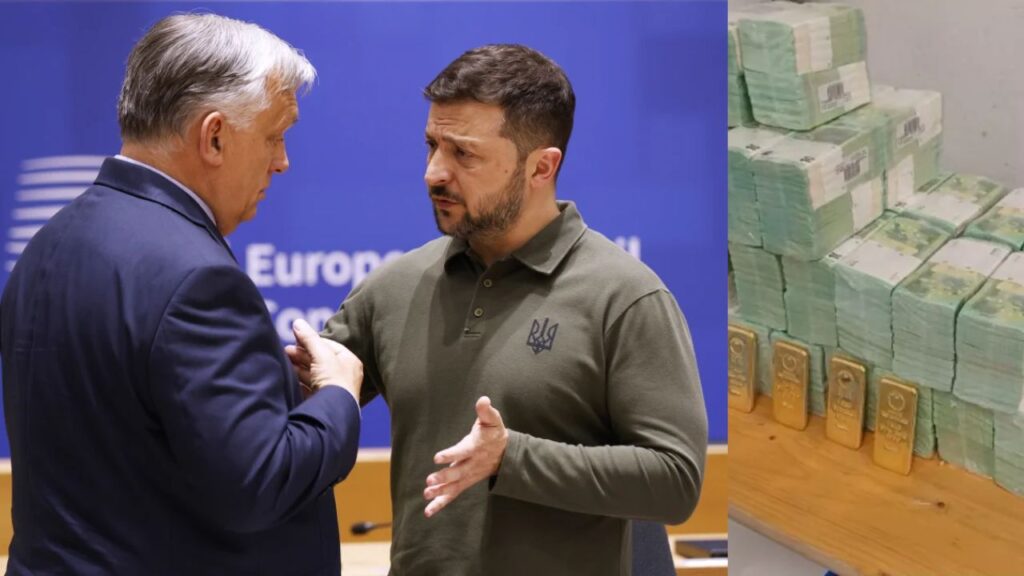
The controversy comes at a delicate moment in Hungarian politics. Prime Minister Viktor Orbán, who has led Hungary since 2010 and is currently the European Union’s longest-serving leader, is heading toward a crucial national election scheduled for April. As the vote approaches, Orbán’s rhetoric toward Ukraine has grown increasingly confrontational, turning the dispute into a broader geopolitical standoff.
The Detention That Sparked the Diplomatic Clash
Hungarian authorities reportedly stopped vehicles believed to be transporting large quantities of cash and gold connected to Ukrainian financial institutions. Officials familiar with the matter estimated the seized assets to be worth approximately $82 million.

Although the exact source and intended destination of the funds have not been officially confirmed, Ukrainian officials argue that the seizure was unjustified and politically driven. Hungarian authorities have so far provided limited details about the operation, which has further fueled the controversy.
The incident quickly escalated into a diplomatic dispute between the two countries. Ukrainian officials claim that the confiscation represents arbitrary action that could affect Ukrainian citizens and businesses operating within Hungary.
Ukraine’s Foreign Ministry issued a strong advisory warning its citizens to avoid traveling to Hungary, stating that their safety could no longer be guaranteed. The ministry also warned European businesses to consider potential risks of property seizures when operating in the country.
Orbán Connects the Incident to Energy Disputes
Prime Minister Viktor Orbán did not directly mention the detained vehicles in public statements, but he hinted at the broader conflict during remarks broadcast on Hungarian state radio.
Orbán suggested that Hungary could restrict certain resources moving through its territory unless Ukraine restored oil shipments that Hungary claims had been disrupted.
The comments highlighted the growing energy conflict between the two nations. Hungary remains heavily dependent on Russian energy supplies and has repeatedly resisted European Union initiatives aimed at reducing reliance on Moscow since the Russia-Ukraine war began.
Orbán warned that Hungary would not allow Ukraine to benefit economically while Hungarian energy security remained under threat. In one controversial statement, he claimed that Ukraine would run out of money before Hungary ran out of oil.
His remarks further intensified tensions and strengthened Kyiv’s argument that the seizure of funds was politically motivated rather than purely legal.
Ukraine Strongly Condemns Hungary’s Actions
Ukraine responded swiftly to the situation. Foreign Minister Andrii Sybiha publicly criticized the Hungarian government on social media, accusing Budapest of behaving more like a criminal organization than a European partner.
According to Ukrainian officials, the seizure of the assets appears to be part of a broader strategy intended to pressure Kyiv into restoring oil flows to Hungary. Ukraine has altered some energy transit arrangements during the war in an effort to reduce financial benefits flowing to Russia.
Kyiv also warned that Hungarian authorities could take further unpredictable actions against Ukrainian individuals or assets inside Hungary. The warning reflects growing concerns that the dispute could escalate if diplomatic negotiations fail.
Orbán’s Election Strategy and Domestic Politics
The controversy also intersects with Hungary’s internal political battle. Viktor Orbán is facing growing opposition from a rising center-right challenger ahead of the April national election.
Recent polling suggests the upcoming vote could become one of the most competitive elections of Orbán’s long political career.

Orbán has increasingly portrayed Ukraine as a threat to Hungarian national interests. He argues that Western pressure to abandon Russian energy would severely damage Hungary’s economy and potentially draw the country closer to the war.
During speeches and public forums, Orbán has warned that a change in leadership could force Hungary to adopt European Union energy policies that eliminate Russian oil imports. He has also suggested that Hungarian youth could eventually be pulled into the conflict if pro-Ukraine forces gain power in Budapest.
These arguments have become a central theme in his campaign messaging, presenting the election as a choice between stability under his leadership and economic instability under pro-European policies.
Hungary’s Growing Divide With the European Union
Hungary’s position on Russia and Ukraine has long placed it at odds with many European Union members. Along with Slovakia, Hungary has resisted several EU initiatives aimed at reducing dependence on Russian fossil fuels.
Budapest has blocked sanctions measures against Moscow, delayed financial assistance programs for Ukraine, and continued energy partnerships with Russia despite the ongoing war.
One notable example involved Hungary postponing approval of a major European Union financial package worth roughly €90 billion intended to support Ukraine’s economy.
Orbán has also deployed Hungarian security forces to protect key energy infrastructure sites within the country. He has accused Ukraine of potentially attempting to disrupt Hungary’s energy supplies.
These actions have deepened divisions within the European Union and raised concerns among Western allies regarding Hungary’s geopolitical alignment.
Risk of Regional Escalation
The detention of Ukrainian assets has added a new layer of tension to an already strained relationship between the neighboring countries.
Analysts warn that if the conflict continues to intensify, it could disrupt trade routes, financial transfers, and diplomatic coordination across Central Europe.
Ukraine is particularly concerned about the precedent set by the seizure of the funds. Officials fear it could encourage similar actions against Ukrainian assets in other countries if political tensions continue to rise.
For now, neither government appears willing to soften its position. Hungary insists that protecting its energy security is the top priority, while Ukraine believes Budapest is exploiting wartime conditions for political leverage.

With elections approaching in Hungary and the war in Ukraine continuing to reshape European politics, the dispute could become an even larger geopolitical flashpoint in the weeks ahead.

Key Facts About the Hungary–Ukraine Dispute
| Issue | Details |
|---|---|
| Seized Assets | Approximately $82 million in cash and gold |
| Location of Incident | Hungary |
| Main Political Figure | Hungarian Prime Minister Viktor Orbán |
| Upcoming Election | Hungary national election scheduled for April |
| Core Dispute | Energy transit conflict and political tensions between Hungary and Ukraine |
| EU Impact | Rising divisions within the European Union regarding Russia and Ukraine policies |