Maintaining muscle is important throughout life, but it becomes especially critical as we grow older. Around the age of 30, the body naturally begins to lose muscle mass gradually unless we actively work to maintain it. This process can lead to decreased strength, difficulty performing everyday activities, and a higher risk of injuries.
Loss of muscle also affects body composition, which refers to the ratio between lean muscle mass and body fat. Healthy body composition plays a key role in metabolic health, mobility, and reducing the risk of chronic conditions such as Why Strength Training Becomes More Important After 50
If your goal is to improve body composition through exercise, personal trainer **Ilene Block**, founder of *Silver and Strong*, suggests that complicated workout routines are not necessary.
According to her, many people waste years doing random exercises in the gym without making meaningful progress. She explains that focusing on a small number of effective compound movement and gradually increasing resistance can produce far better results.
Block notes that when she first started strength training, she made common mistakes such as:
– Avoiding lower-body exercises
– Repeating the same routine for years
– Not increasing the weight over time
Once she focused on the right exercises and applied **progressive overload**, she began seeing real changes in muscle strength and body composition.
Understanding Body Shape and Training
It is important to understand that body shape is influenced by many factors beyond exercise. Genetics, bone structure, height, and digestion also play a role. While resistance training can help reshape the body through **muscle growth (hypertrophy)**, it cannot completely override these biological factors.
Additionally, body shape alone should not be considered a reliable indicator of health or physical capability.
The Importance of Compound Exercises
Block recommends focusing on compound exercises, which are movements that work multiple major muscle groups at the same time. These exercises help build strength that transfers well into everyday activities.
Her recommendation is to perform these exercises **three times per week**, resting **60–90 seconds between sets** and gradually increasing the weight every few weeks.
1. Squats
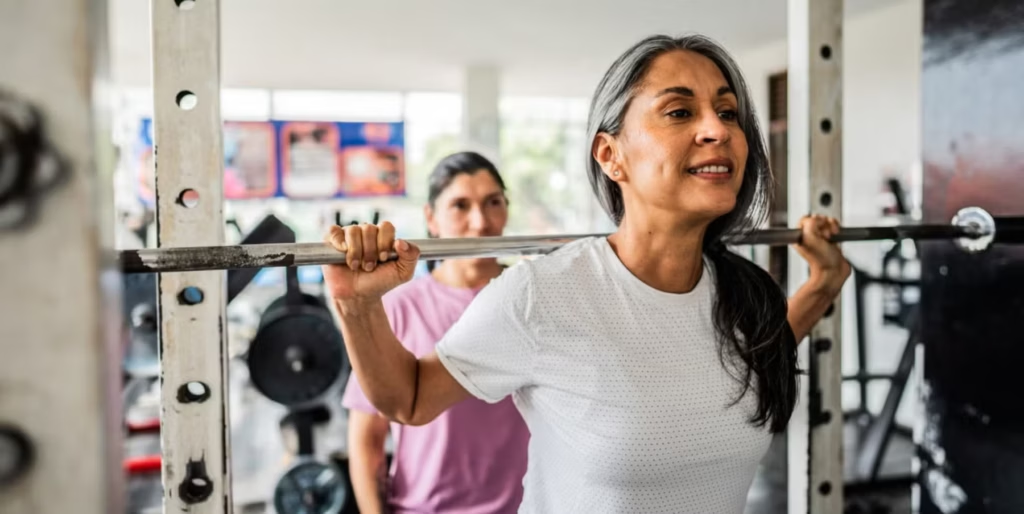
Squats are considered one of the most effective lower-body exercises, particularly for women over 50. They engage the quadriceps, glutes, hamstrings, and core simultaneously.

Beginners can start with **bodyweight squats or a light dumbbell (goblet squat)** and gradually increase the load as strength improves.
2. Romanian Deadlifts
Romanian deadlifts are highly effective for strengthening the **hamstrings and glutes** while also supporting lower-back stability.
The movement should first be learned with lighter weights to ensure proper technique. As strength and confidence increase, additional resistance can be added gradually.
3. Overhead Press
The overhead press targets the **shoulders and arms** while also requiring the core to stabilize the body. This makes it a highly efficient upper-body strength exercise.
However, it can place stress on the shoulder joints and rotator cuff. People with shoulder issues should consult a trainer or physiotherapist before including it in their routine. A **landmine press** can be a safer alternative.
4. Rows
Row variations, such as dumbbell rows, barbell rows, or cable rows, strengthen the upper back and improve posture.
Strong back muscles help prevent **rounded shoulders and forward head posture**, which often develop with age. Regular rowing exercises promote an upright posture and better overall upper-body stability.
Final Takeaway
Building muscle later in life is entirely possible with the right approach. A simple routine built around a few **compound strength exercises**, performed consistently and with progressive increases in weight, can significantly improve strength, posture, and overall physical health.
 Popular Skincare Product Faces Doubt as Experts Question Claims of Miracle Beauty Benefits
Starting small is perfectly fine. Even light weights can lead to noticeable improvements over time when training is consistent.