I may have previously mentioned flushed cheeks a red nose and a complexion that felt hot when asked to describe rosacea, but I had no idea that the blooming pinpoint pustules on my nose and chin were actually a type of the condition. Over the years, different general practitioners have diagnosed papulopustular rosacea as anything from dermatitis to impetigo to acne. One of the four subtypes of rosacea, it is distinguished by small red or white inflammatory pustules that frequently form in the middle of the face, along with widespread redness and a noticeable stinging sensation (a warning sign that, at least for me, a flare-up is near).
How can you tell if you have rosacea?
Rosacea, which is thought to affect slightly more than 5% of the world’s population, is more common in women than in men. According to a 2024 study, the age group of 25 to 39 has the highest prevalence of the condition, which contradicts earlier findings that suggested those over 40 were the most vulnerable.
Perhaps because of this, even medical professionals mistake papulopustular rosacea for acne in younger patients. Unfortunately, skincare routines for acne can frequently exacerbate rosacea. Choosing skincare that’s tailored to the type of rosacea you have can make all the difference. Similarly, the steroid cream I was prescribed for suspected impetigo fueled my own rosacea fire, causing pustules to multiply at an alarming rate.

For these reasons, consultant dermatologist and Self London founder Dr. Anjalo Mahto emphasizes the significance of receiving a precise diagnosis, not only of rosacea per se, but also of your specific subtype. Selecting skincare products that are specific to your type of rosacea can have a significant impact. See a consultant dermatologist if you can, and refrain from self-diagnosing or using online dermatology resources.
You can avoid recurrent flare-ups and the ensuing post-inflammatory pigmentation with just one visit. I discovered that seeing Dr. Alexis Granite, a consultant dermatologist, was a life-changing investment that calmed my skin and mind (the late-night Google image searches were getting out of control). Once you understand what you have, you can put together a dermatological toolkit to manage your rosacea symptoms and treat them when they do appear.
What is recommended for rosacea by a dermatologist?
Dr. Mahto suggests using products with calming niacinamide and azelaic acid for erythematotelangiectatic rosacea, also known as subtype one, which is characterized by redness and broken blood vessels. Because of its ability to shrink pustules, I view the latter ingredient as the holy grail of my skincare regimen. great efficacy in treating papulopustular rosacea subtype two, particularly when paired with gentle non-comedogenic products.
Dr. Mahto emphasizes that mild exfoliants can help, but this form of rosacea will most likely require a dermatologist’s advice for the more severe but much less common rhinophymatous rosacea also known as subtype three. Similarly, prescription steroid eye drops may be required for ocular rosacea also known as subtype four in order to reduce inflammation and avoid infection.
SPF is essential regardless of the type of rosacea you have, especially since UV exposure frequently causes flare-ups. Dr. Mahto suggests using a physical sunscreen containing zinc oxide or titanium oxide to avoid this because chemical sunscreens can aggravate sensitive skin.
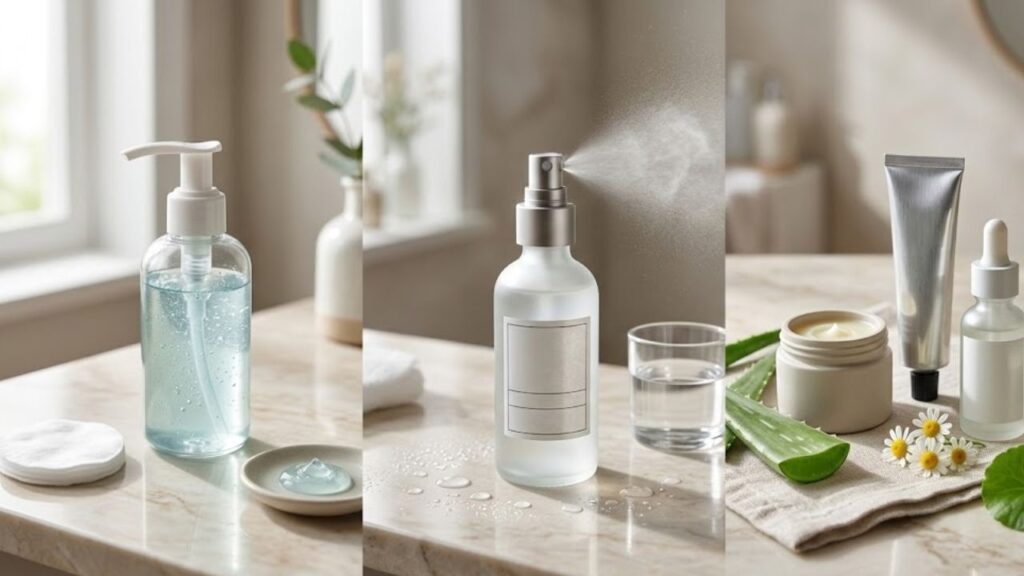
Speaking of flare-ups, keeping a supply of SOS skincare products on hand can help calm irritated skin. Dr. Mahto advises keeping some soothing essentials in the bathroom cupboard, such as a gentle fragrance-free cleanser and thermal water spray to cool the skin. barrier repair cream with ceramides or panthenol is important for recovery, and ingredients like colloidal oatmeal and aloe vera are really helpful for reducing redness and calming inflammation too.
Avoiding skincare products if you have rosacea
Generally speaking, it’s a good idea to avoid ingredients that are too stimulating. Menthol along with alcohol and artificial fragrances is one of the main causes of irritation, despite the fact that it may seem cooling for hot red skin according to Dr. Mahto. Exfoliants should also be used carefully because abrasive exfoliants and high-strength acids can worsen sensitivity.
Maintaining a straightforward and efficient skincare regimen for rosacea is also highly recommended. Stick to a minimal regimen focused on hydration and soothing ingredients, and patch-test any new products to prevent reactions, as overusing skincare products or layering too many actives together may overwhelm sensitive skin.

The top skincare products to try right now for rosacea
Toleriane Foaming Gel Cleanser by La Roche-Posay
When using this incredibly effective yet gentle cleanser, don’t expect a foam party. Its texture is more like a cooling gel, and it removes the day’s grime without the use of rubbing or abrasive cloths, which can exacerbate rosacea symptoms. Whether you’re getting ready for bed or makeup, the high glycerin content leaves skin feeling calm and soft.
The best SOS cream is Ilia Barrier Build Skin Protectant
This colloidal oatmeal-based cream is great to have on hand if you have subtype one rosacea and find that your skin becomes extremely sore during a flare-up. It’s a rosacea rescue treatment for dry skin in particular and is also rich in non-sensitizing moisture-boosting squalane and glycerin ceramides and calming algae extracts.
Peptide Hydration Cream
With peptides to accelerate collagen production and niacinamide to support the skin barrier and balance out skin tone, this replenishing moisturizer makes skin more resilient over time thus less prone to flare-ups. Although it’s not comedogenic, it feels very cozy and makes a smooth surface for foundation.
Omega Water Cream on The Inkey List
Whether you’re experiencing a flare-up or not, ceramides glycerin niacinamide and moisture magnet betaine work together to keep skin balanced and supple with this lightweight cooling hydrator.
The Eye Cream
This fragrance-free eye cream is a good option for people with rosacea because it contains skin barrier-supporting cucumber seed calming algae extracts and strengthening peptides. We appreciate the instant awake effect that the added diamond powder creates by scattering light around the area.
Perfect Gossamer Tint SPF 50
Squalane and moisture-binding sodium hyaluronate are abundant in this fragrance-free sophisticated silky textured mineral SPF that keeps skin smooth. Whether worn alone or under foundation the four tints are particularly useful for reducing redness and accommodate all skin tones.
15% Clarifying Serum with Blemicalm Azelaic Acid
This ointment which is a salve for papulopustular rosacea eruptions and contains colloidal oatmeal to further reduce inflammation is a high-strength azelaic acid over-the-counter product higher strengths are available with a prescription.
CC Red Accurate
Because of its calming smoothing and hydrating properties this anti-redness cream with added SPF 25 is radiant rather than chalky making morning makeup routines a breeze.