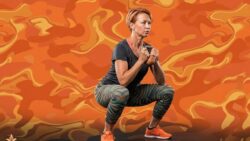
As a fitness editor and long-distance runner, I’ve learned that sit-ups aren’t the best way to create a truly strong core. After becoming a mother, this lesson became even clearer to me. Rebuilding my midsection after giving birth took months of consistent training, and interestingly, I didn’t rely on sit-ups at all during that process.

Instead of chasing a visible six-pack, the focus should be on developing deep core stability. This type of strength protects the spine, improves posture and acts like a natural support belt when you lift, run, jump or carry weight. One simple movement that has consistently delivered results for me is the deadbug exercise. Below is the exact routine I used to rebuild my strength.
Before starting, remember that if you’re completely new to exercise, dealing with an injury, pregnant or recently postpartum, it’s always wise to consult a qualified professional before beginning a new workout routine.
Why Deadbugs Are So Effective
The deadbug is widely considered one of the most effective exercises for training the core to stabilize the spine while the arms and legs move. During the movement, you activate the deep abdominal muscles, particularly the transverse abdominis, along with the pelvic floor.
These muscles wrap around the midsection like a supportive corset and help protect the internal organs while stabilizing the pelvis. Because of this, deadbugs are especially beneficial for women recovering after childbirth and for anyone experiencing pelvic instability.
Another advantage of the deadbug is that it trains the core without placing pressure on the spine. Unlike sit-ups, crunches or even some plank variations, this movement keeps you lying on your back in a tabletop position, encouraging your lower back to stay pressed into the floor for support.
If at any moment your lower back begins to lift away from the mat, that’s usually a sign your core isn’t properly engaged. When this happens, pause the exercise, reset your position and focus on reconnecting with your core muscles.
The Deadbug Workout Routine
When I was rebuilding my strength after giving birth, I worked with a postnatal physiotherapist who recommended a simple deadbug progression. The goal was to gradually build back enough core stability to safely return to running and strength training.
Over time, I worked up to completing three sets of twenty repetitions for each of the following deadbug variations. Even a year later, I still include this routine regularly in my workouts because of how effective it is.
Standard Deadbug Exercise
Start by lying flat on your back. Raise your arms straight toward the ceiling so they are aligned with your shoulders. Lift your legs into a tabletop position with your knees bent at ninety degrees and positioned directly above your hips.

Activate your core and pelvic floor by gently drawing your abdomen inward, similar to the feeling of tightening a zipper on snug jeans.
Slowly extend one leg away from your body, straightening it as you lower it toward the floor. Stop just before the heel touches the mat. At the same time, extend the opposite arm backward toward the floor behind your head.
Pause briefly while maintaining control, then return to the starting position. Repeat the movement on the opposite side, keeping the motion slow and controlled throughout the exercise.
Pilates Ball Deadbug Variation
For this version you’ll need a small Pilates ball. Begin again in the tabletop position with your arms reaching upward.
Place the Pilates ball against the thigh of one leg and press the ball using the opposite hand. This creates extra tension through the core.
Now perform the deadbug movement by extending the leg that does not have the ball against it while simultaneously extending the arm that is not pressing the ball.
Maintain pressure on the ball throughout the movement. This added resistance forces the core muscles to work harder to stabilize your body.

Complete all repetitions on one side before switching the ball to the other leg and repeating the exercise on the opposite side.
 4 Therapeutic Yoga Poses That May Help Lower Chronic Inflammation and Support the Body’s Healing